


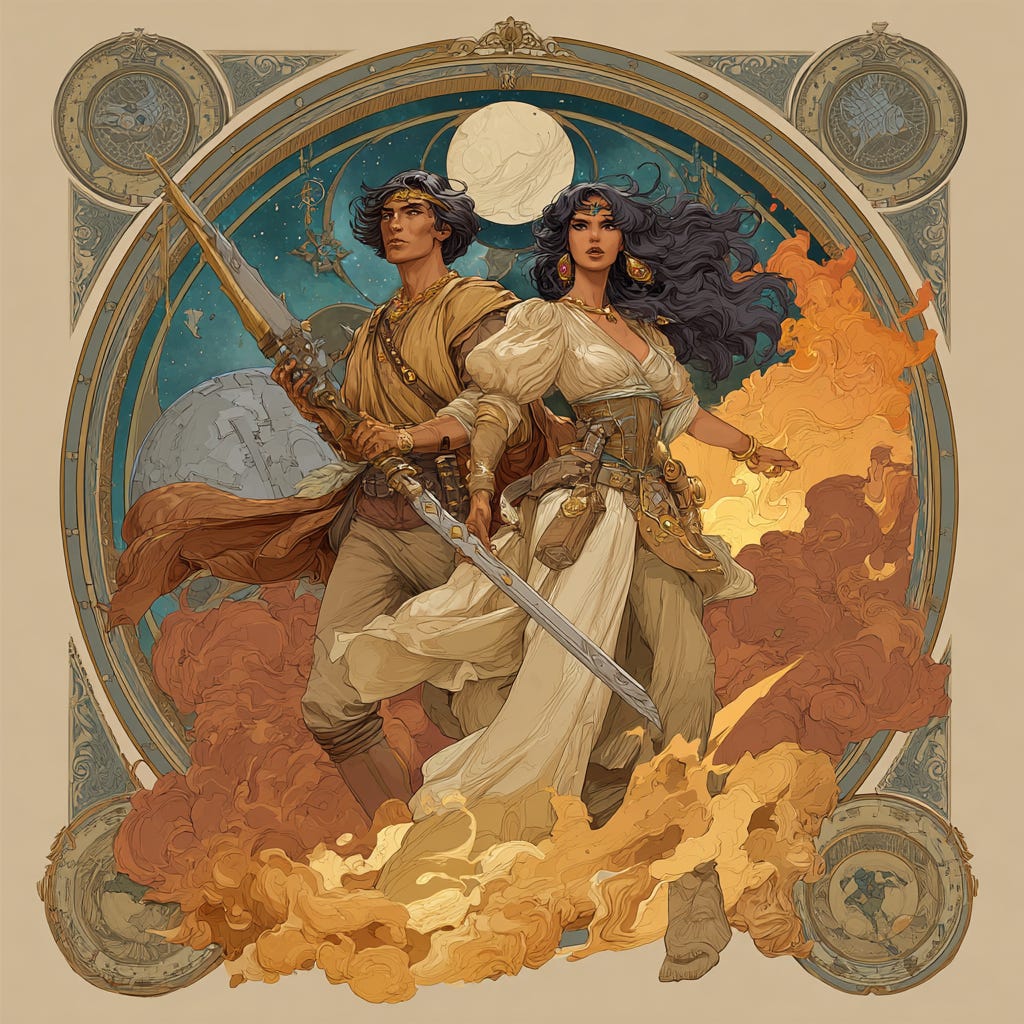
If modern fantasy is the child of two fathers (Robert E. Hward and J.R.R. Tolkien), than one could make the argument that Edgar Rice Burroughs was the midwife that helped bring it into the world, via his Barsoom novels. When the history of the genre is looked back on, these remarkable books often get looked over, which is a shame, since so much of what makes modern fantasy fantastical comes from these pages.
Burroughs was an interesting character in his own right. Born in 1875, after a somewhat aimless life in which he did everything from working on a ranch to laboring as a pencil sharpener salesman, he became a voracious reader of pulp magazines and realized:
“[...] if people were paid for writing rot such as I read in some of those magazines, that I could write stories just as rotten. As a matter of fact, although I had never written a story, I knew absolutely that I could write stories just as entertaining and probably a whole lot more so than any I chanced to read in those magazines.”[16]
(a conceit followed by many genre writers today, with varying levels of success…)
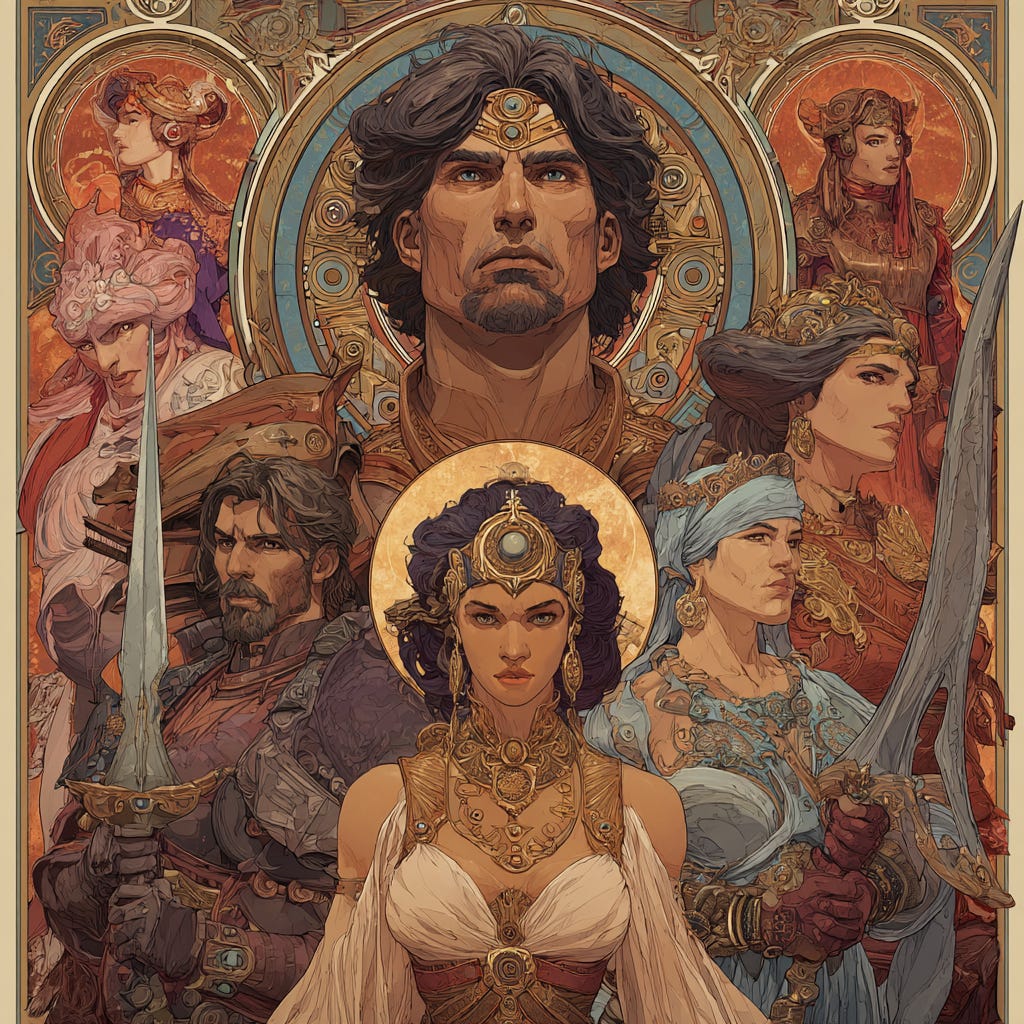
This isn’t a biography, see the relevant Wikipedia page for more details. His greatest creation during his lifetime was Tarzan, which was a sensation during his lifetime, merchandised to the hilt and beyond with movies, comic strips, stage musicals, etc, though these days there is a bit more skepticism about it, for reasons that should be obvious. That being said, I think when it comes to actual cultural influence, Burroughs Mars stories have a wider reach...he had more success with Tarzan, but the Barsoom novels have had a wider legacy when it comes to the development of fantasy and science fiction. When Tarzan is forgotten, as I think it is now in the process of being, John Carter, Dejah Thoris, etc will likely live on. Maybe...possibly.
A brief description of the setting – Mars (called by the natives Barsoom) is a dying world, home to various grips of native martians. Red Martians, who look human, have red skin and are oviparous (they lay eggs – yes, the biology makes no sense, but its pulp fiction so don’t think about too much). Green Martians who are green skinned, have six lines and are savage and warlike. Other groups are introduced as the series progresses (White Martians, Black Martians, etc). In this setting, beginning with the first novel A Princess of Mars, Civil War veteran John Carter is transported to Mars, where he finds he has superhuman strength and speed due to the planets lower gravity. He has various adventures, rescues and falls in love with Dejah Thoris, Princess of the city of Helium, saves Barsoom from destruction and then gets sent back to Earth. Later novels detail is return, more rescues of Dejah Thoris (who seems to have a knack for getting kidnapped) and the adventures of their children and other characters, spanning eleven books in all.
At the time they were written, not one would called this fantasy, because that classification did not e exist. If they were written today, they would considered fantasy/planetary romance. What is not in doubt is the influence they had on scifi and fantasy. Many of the writers of Scifi’s Golden Age were fans of the series (as was Ronald Reagon, who states that A Princess of Mars was his favorite book growing up). When it comes to fantasy, the influence is there when it comes to the world building. Over the course of the series, Burroughs turns Barsoom from another bog-standard pulp setting into a richly detailed world with vibrant cultures that exist in their own terms, a concept that to this day is one of the corner stones of fantasy. The idea of the stranger in the strange land as depicted be John Carter can be seen in modern-day isekai stories.
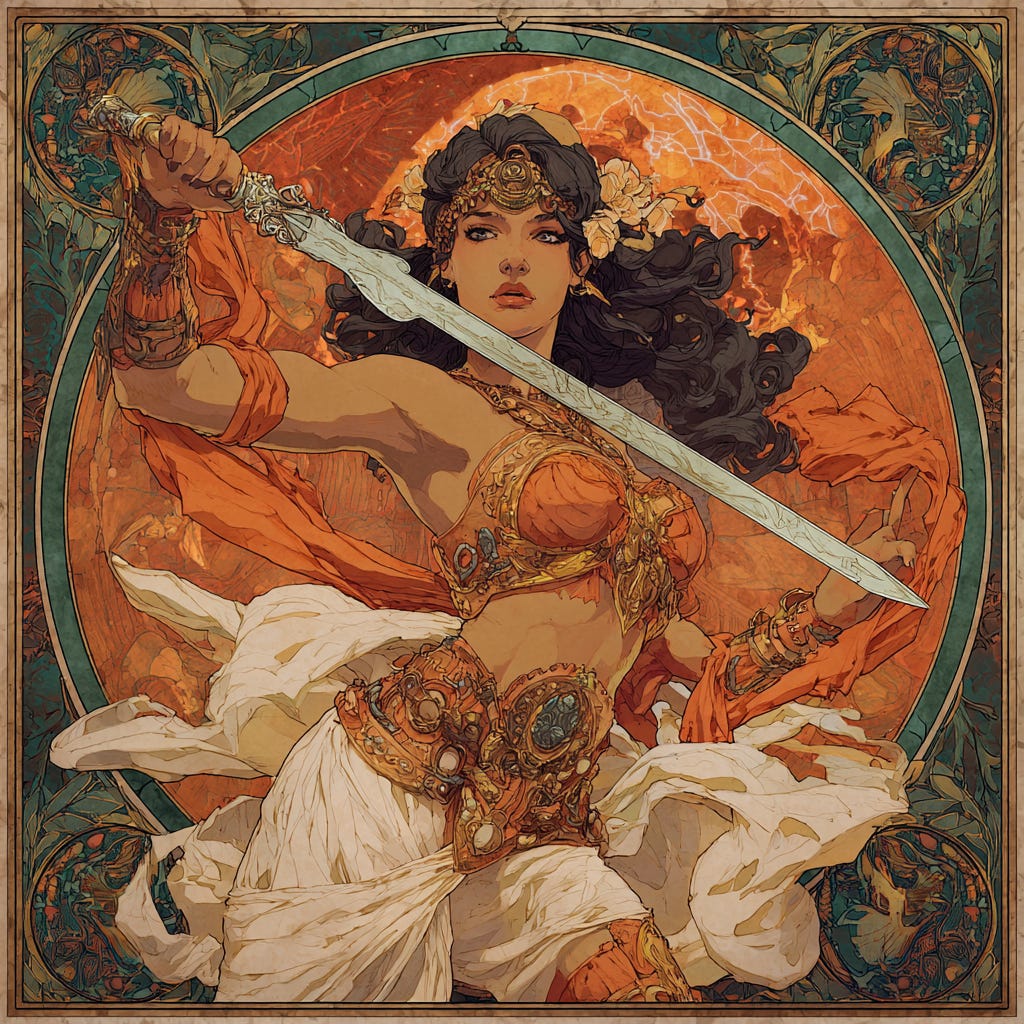
But above all, I think the main inheritance from the Barsoom stories is the pure spirit of adventure and imagination. Even today the stories can light up the imagination. Brave heroes and beautiful damsels anging across strange and wondrous alien landscapes, but without the blood, thunder and gloom of Conan the Barbarian or the epic bigness of Lord of the Rings. Adventure for its own sake. That’s what I get out of the Barsoom novels, and of they seem to be forgotten today, its only because so they came out so early and were so influential that many writers since had repurposed tropes and themes fro the books for their own works:
Nevertheless, without Burroughs and Barsoom, the fantasy genre would look very different, and be a lot less interesting than it is today. The 2012 movie admittedly did it no favors. This is a shame, and hopefully someday there will be a proper adaption.
Carter and the people of Barsoom would look amazing animated in the style of Disney's Tarzan.